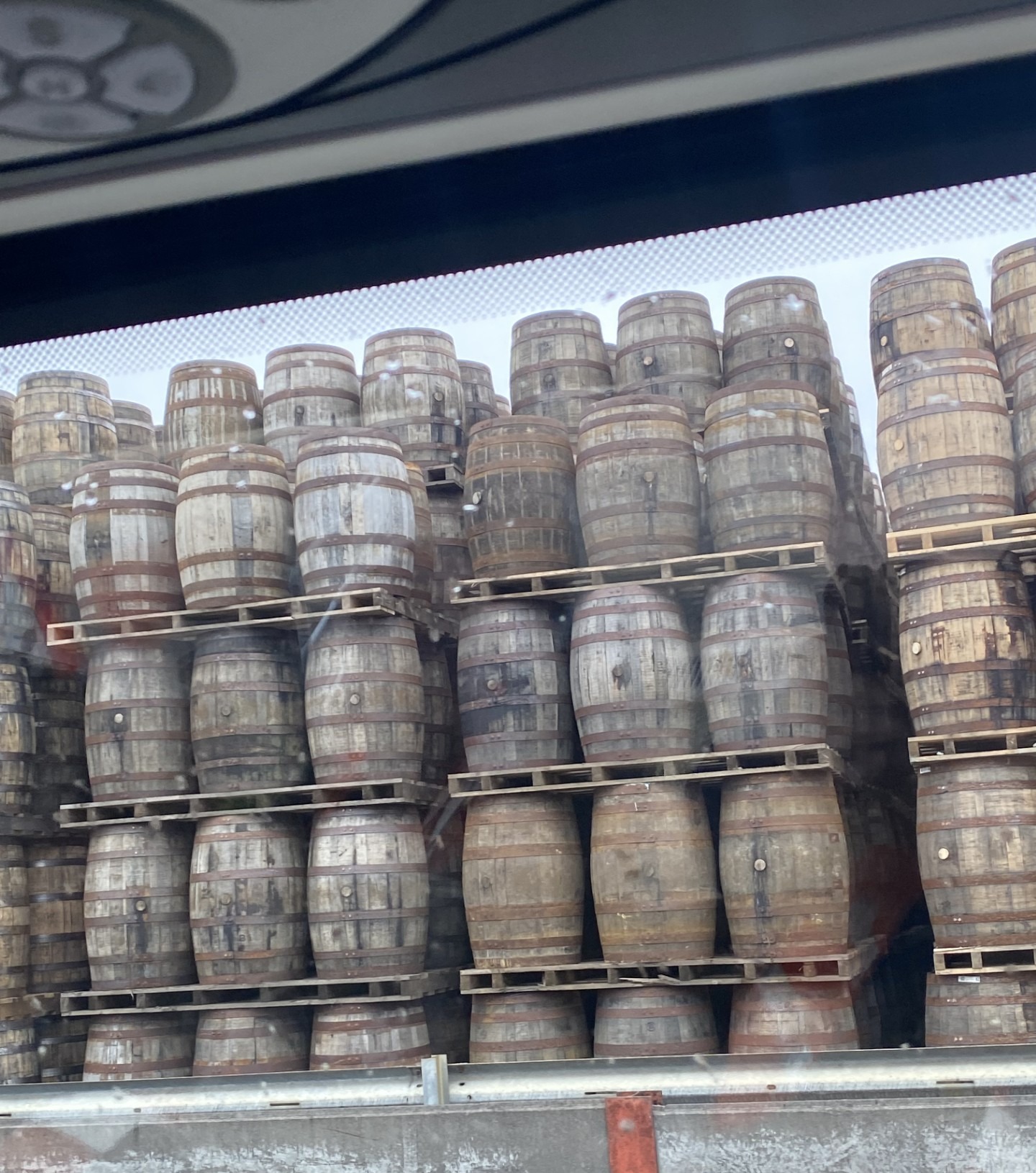
Tour of William Grant & Sons Distillery
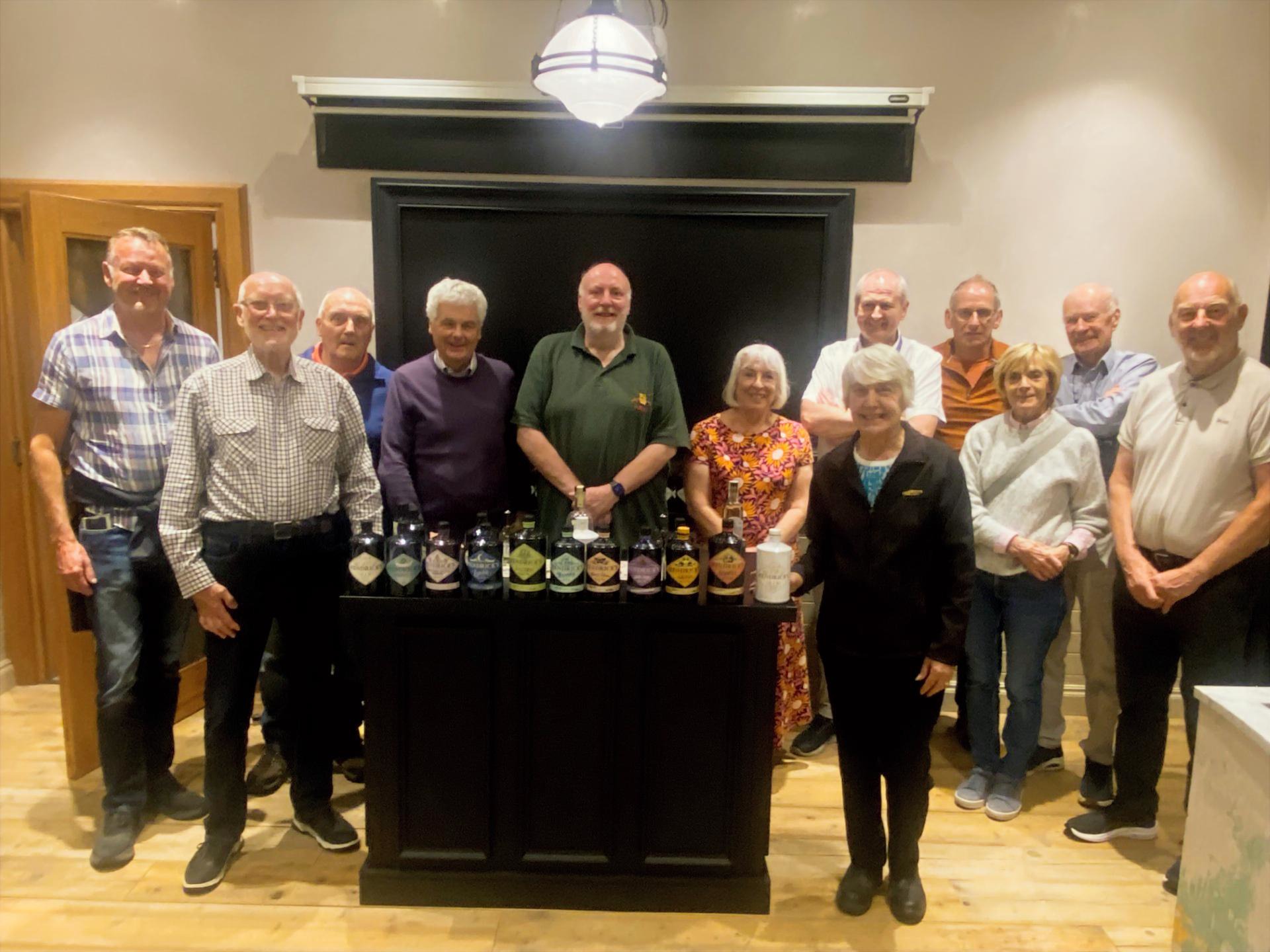
Lesley with her visitors
On approaching the Gothic Styled gate we were greeted by the effervescent Lesley Gracie whose sense of smell we established during our tour, underpinned the launch of more than one million cases of Hendricks Gin a year. We were led into the Hendrick’s Master Distiller own greenhouses at Hendrick’s Gin Palace, one to grow Mediterranean plants to experiment with botanicals and flavours and one to simulate a tropical rainforest. At the heart of the gins which Lesley creates, is her sense of smell, triggering memories and stories as she pulls leaves and flowers from different plants to choose the combinations to test out in her innovation laboratory.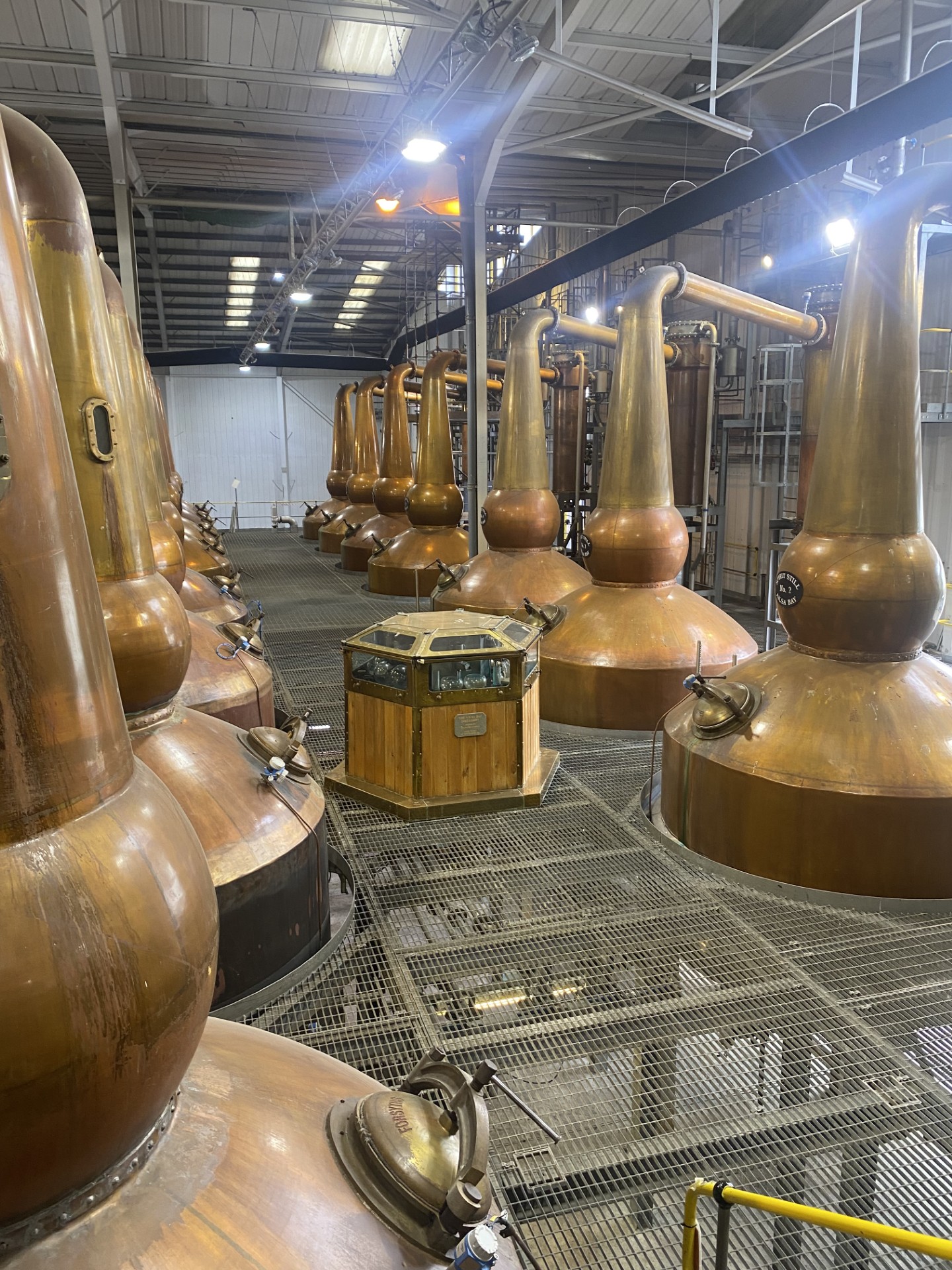
Hendrick’s uses a blend of spirits produced from a Carter-Head Still (constructed in 1948), of which there are only a few in the world, and a small pot still, built in 1860 by Bennett, Sons & Shears. Both have been restored to working order after being bought at auction in the 1960s by the former William Grant Life President, Charles Gordon They were a sight to behold. Then onto an education in botanicals. And ultimately to the heart of the magic, Lesley’s own amazing laboratory where she explained how flavours and potions are developed and mixed. Fascinating!
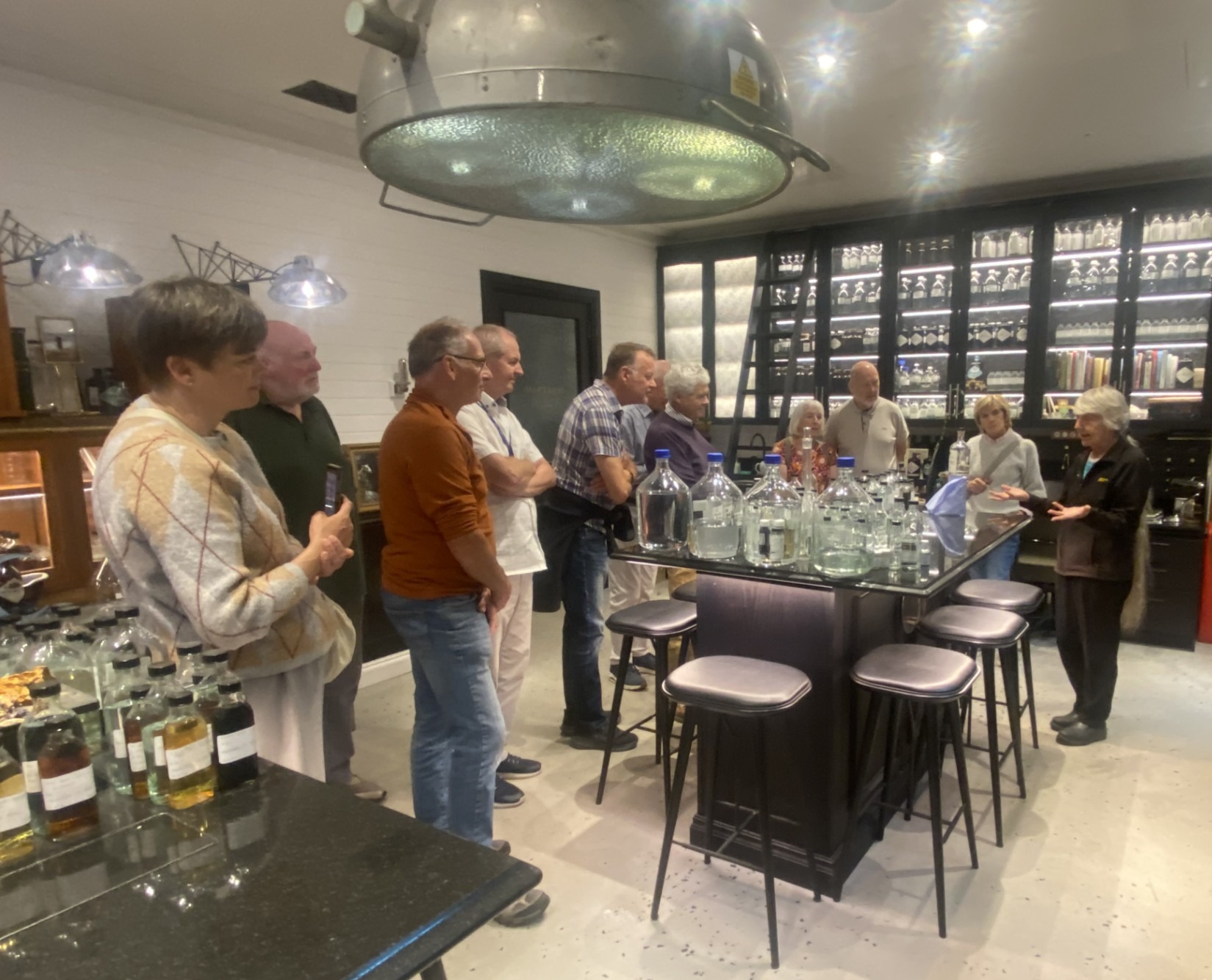
Where the magic happens
Waving a hearty cheerio to the talented Lesley, we were then greeted by knowlegeable Plant Manager Michael Johnston who took us to the Ailsa Bay building where were led through to the mash tuns then onto a bird’s eye view of the stills, all the while Michael explaining the processes of distillation to achieve the end result.
Thereafter we boarded a bus to experience the vast enormity of this amazing paternalistic, local employer’s extensive distillery site. Concluding our tour in the old fire station with refreshments.
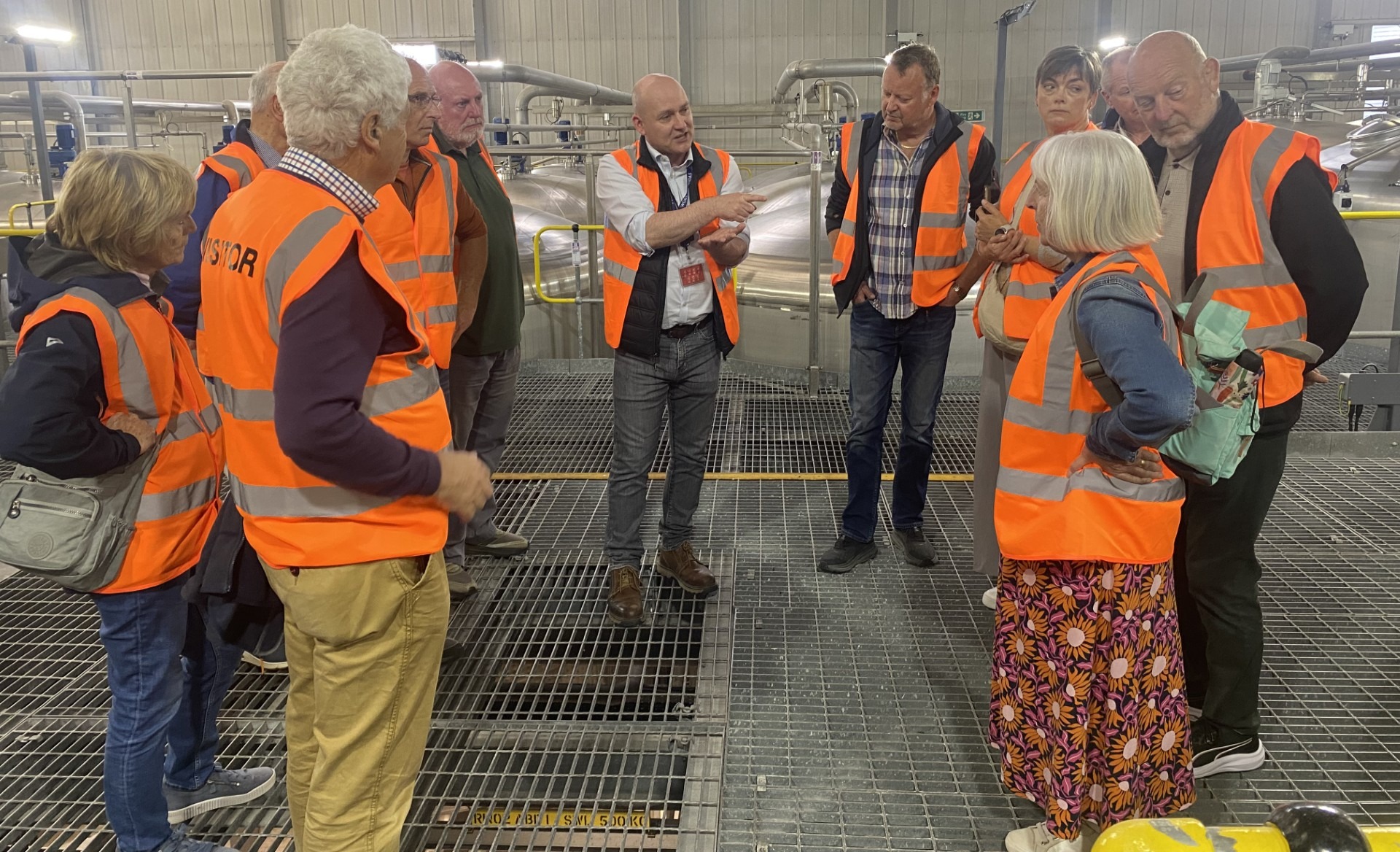
Michael with his visitors
President Howard gave a hearty and worthy vote of thanks for our excellent visit.
Post Script
Six generations of Grants have stood together through thick and thin to hold the title of Scotland’s oldest continuously family-run, blended whisky makers. The reason for William Grant & Sons building the distillery was because of a quarrel between the Grant family and the Distillers Company Limited (DCL). Under the close eye of Charles Grant Gordon, the Girvan distillery was built and producing alcohol within nine months of ground break.
Built in 1963, Girvan Distillery was an amazing feat at the time, taking just 9 months to build. Charles Gordon and four hundred locals worked around the clock to make sure one of the most advanced distilleries in the world was ready in time for the first spirit to be bottled on Christmas Day, as was the case at their sister distillery, Glenfiddich in 1887. In 1990, they installed the first patent still, enabling a unique method of making grain whisky. Today, the Girvan grain whisky is seen as one of the best in the world and is at the heart of every single bottle of Grant’s.
One of the many reasons this 64 acre site was chosen, was Girvan harbour accessibility to import grain and the location close to Penwhapple Resevoir. They convert whisky production by-products into biogas, which is then used as a fuel to produce renewable energy, including electricity and heat, at their Girvan Distillery. This biogas is also used to power specially converted trucks that transport Glenfiddich spirit at all stages of production, from the distillery to bottling.
William Grant & Sons has acquired Scotland’s best-selling whisky brand, The Famous Grouse, along with Naked Malt, from The 1887 Company in a deal completed July 1, 2025. The move significantly expanded the independent distiller’s presence in the global Scotch whisky market.
This acquisition brought together two of Scotland’s most recognised whisky companies, with The Famous Grouse joining William Grant & Son’s existing portfolio that includes Glenfiddich, The Balvenie, and Monkey Shoulder, Ailsa Bay and Sailor Jerry Rum.